



Medical sheepskin can make long hours in bed, a chair, or a wheelchair more comfortable. Its springy wool pile helps spread contact across the body while allowing air to move around the skin. The right choice still depends on the user, the setting, and the care label. Here’s how to choose, use, clean, and inspect one safely.
Table of Contents
- What Is Medical Sheepskin?
- How Medical Sheepskin Supports Comfort and Pressure Care
- Medical Sheepskin Formats and Where They Are Used
- How to Match Medical Sheepskin to Your Situation
- Cleaning, Drying and Inspecting Medical Sheepskin
- Medical Sheepskin from Kiwi Sheepskins
- FAQ: Medical Sheepskin Questions Answered
- Conclusion
What Is Medical Sheepskin?
Medical sheepskin is a sheepskin pelt selected and prepared for pressure care. It usually has a dense wool pile that is clipped to a fairly even height. The wool gives a soft cushion, while the leather side keeps the pelt together.
That makes it different from a decorative rug or a longwool home throw. A medical pelt needs to cope with regular use. In some clinical products, the tanning and wash process is designed for high-temperature laundering. Other pelts use a lower-temperature care method. You need to check the product instructions before washing.
 The term can cover more than one design. Some products are natural-shaped pelts with no fabric backing. Others are trimmed into mattress topper overlays, seat pads, boots, wheel chair pads, or small protectors. The shape changes how the wool sits under the body and how easily you can move the item from one place to another.
Wool has a useful mix of traits for comfort. Its fibers are springy, so they compress under weight and recover when the pressure lifts. The pile also creates small air spaces. These spaces can help reduce the close, clammy feel that often comes with sitting or lying on a flat synthetic surface.
Still, a pelt is not a mattress, a cushion prescription, or a treatment for an existing wound. It should support a wider care plan. If someone has broken skin, a pressure injury, poor circulation, numbness, or severe swelling, ask a nurse, doctor, or occupational therapist before use.
Our sheepskin glossary explains the difference between medical pelts, seat pads, wheelchair covers, and other sheepskin terms. That distinction helps when you are comparing products that look similar in a photograph.
At Kiwi Sheepskins, we focus on genuine New Zealand sheepskin products and clear care guidance. We think the label should tell you where the pelt originates, how it should be washed, and what type of use it suits. If those details are missing, pause before buying.
How Medical Sheepskin Supports Comfort and Pressure Care
Medical sheepskin supports comfort by changing how weight, warmth, moisture, and movement meet the skin. It does not remove pressure on its own. Instead, the wool pile gives the body a more forgiving surface.
When a person sits or lies in one position, pressure builds at points such as the tailbone, hips, heels, elbows, and shoulder blades. A springy pile can spread some of that load across a wider area. It also reduces direct contact with a hard seat or mattress surface.
Friction matters too. Skin can be damaged when the body slides against fabric during a transfer or when a person shifts in bed. A correctly placed pelt may reduce some rubbing. It cannot correct poor posture or replace safe transfer methods.
Moisture is another part of the comfort problem. Wool can take up moisture vapor and still feel less wet than a flat, non-breathing surface. Air movement through the pile may help the area feel less hot. That is useful for people who spend many hours in one position, but it does not mean the skin can go unchecked.
Key Takeaway: A medical pelt can support pressure care, but regular skin checks and position changes remain essential.
Fit affects the result. A pelt that bunches under the body can create a new pressure point. One that is too small may leave the vulnerable area uncovered. The surface should lie flat, with the wool facing the body and no deep folds beneath the hips or heels.
Care staff should also look at the whole setup. Check the bed height, cushion depth, transfer method, clothing seams, and moisture source. The pelt is one part of that system. It should make the next task easier, not hide a problem that needs attention.
Alt: medical sheepskin overlay supporting comfort on a bed]
Medical Sheepskin Formats and Where They Are Used
Medical sheepskin comes in several formats. The best shape depends on where pressure occurs and how often the item must be moved or washed.
A bed overlay is often the simplest format for someone who spends much of the day lying down. It gives broad coverage and can be moved during washing. Measure the mattress or intended zone first. A pelt that is too short may leave the sacrum or heels outside the wool.
Chair pads suit people who spend long periods in a recliner or lounge chair. Look at the chair’s seat angle. A deep recliner can push the pelt toward the back when the user sits down. If the pad moves, it may need a better fit rather than extra layers beneath it.
Wheelchair users need a closer fit. A thick overlay can alter the seat height and the angle of the hips. That may affect foot placement or transfers. Ask an occupational therapist to review the setup if the chair is used every day.
Medical boots and heel protectors solve a smaller problem. They can reduce contact around the foot or ankle while someone rests. Swelling can change through the day, so the fit needs checking. A boot that feels loose in the morning may become tight later.
Some Australian medical products in the wider market use a fabric backing or a stated 30 mm pile. Those details may help with wash control and consistent thickness. Kiwi Sheepskins’ Medical Pelts take a different path. They use a natural-shaped, backing-free wool pile, which can feel more open and flexible under the body.
There is no universal best format. Choose by body area first. Then check the surface, movement, wash needs, and help available to the user.
How to Match Medical Sheepskin to Your Situation
Choosing medical sheepskin starts with the user’s daily routine, not the product photo. Ask where the person spends the longest stretch of time and which area needs the most support.
For someone who spends most of the day in bed
Start with a broad pelt or bed overlay. It should cover the main contact zone without bunching at the hips. If the person slides down the bed, check the bed angle and transfer plan before adding more material.
Keep the heels in mind. They may need separate support because they have little soft tissue beneath them. A large pelt may not cover every point that needs checking.
For a recliner or sofa user
Measure the seat from front to back. Then measure the backrest if you want upper-body coverage. A seat pad may work well for daytime use, while a larger pelt gives more room to change position.
Watch for folds after every transfer. Smooth the wool before the person sits down. If the pelt keeps sliding, review the chair surface and the user’s movement. Do not add a loose non-slip layer without checking whether it changes seat safety.
For wheelchair use
Check the current cushion first. A sheepskin layer may change the user’s height and pelvic position. That can affect the armrests, footrests, table height, and transfer path.
A wheelchair user may need a specialized cover rather than a full natural-shaped pelt. The right choice is the one that stays flat and does not interfere with the chair's moving parts.
For foot or ankle comfort
Choose a boot or protector based on the person’s swelling, bandages, and mobility. An open style may suit someone who transfers or walks. A softer bed style may suit someone who only needs coverage while resting.
Medical sheepskin can feel warm in winter and less stuffy in summer, but temperature comfort varies from person to person. Check the skin after use, especially if the user has reduced sensation.
Our Pressure Relief Kit can help shoppers compare related comfort pieces in one place. Read each item’s care details before purchase. A bundle is useful only when its parts suit the person’s actual routine.
Ask a clinician for advice if there is an existing pressure injury, a wound, strong pain, poor circulation, or a major change in skin color. Stop using the pelt if redness does not fade after pressure is removed, or if the user reports heat, pain, or rubbing.
Cleaning, Drying and Inspecting Medical Sheepskin
Cleaning medical sheepskin is a balance between removing soil and protecting the wool and leather. Always follow the care label for the exact pelt. Products differ in tanning method, backing, stitching, and wash temperature.
Before washing
Shake the pelt outdoors or in a well-aired room. Remove loose dirt with a gentle brush or a vacuum using suction only. A rotating brush head can pull at the wool.
Look over the leather side. Check for hard spots, cracks, loose seams, or areas where the wool is shedding. Also inspect the wool for matting, food, moisture, or residue. Small problems are easier to handle before a wash.
Spot clean first
For a small mark, use a soft cloth with cool or lukewarm water. Dab from the outside of the mark toward the center. Do not scrub hard. Press with a dry towel to draw out extra moisture.
Use a mild wool-safe wash that matches the product instructions. Avoid bleach, biological enzyme cleaners, fabric softener, and harsh household detergent. These products can affect the wool or leather.
Kiwi Sheepskins' Woolskin Wool Wash Sheepskin Shampoo is designed for gentle cleaning of sheepskin items, including medical sheepskins. Even with a suitable wash, test a small hidden area first when the care label permits it.
Washing and drying
Use the temperature and cycle stated on the product page. Some medical pelts are designed for repeated higher-temperature washing. Others require a delicate, lower-temperature wash. Never assume that a medical label means every pelt can go through a hospital laundry cycle.
Do not twist or wring the pelt. Press out water with towels, then reshape the leather while it is damp. Lay the item flat or line dry it in moving air, away from heaters and strong direct sun.
High heat can shrink the pelt or make the leather stiff. A tumble dryer can do the same. Drying may take time, but rushing this stage can permanently change the shape.
After drying
Once the pelt is fully dry, brush the wool lightly to lift the pile. Check the leather again. It should remain flexible rather than hard or board-like.
Inspect the pelt each time it is put back into use. Look for:
- New folds beneath the body.
- Wool that has become flat or matted.
- Damp patches or a strong odor.
- Loose stitching or separated wool.
- Leather that has hardened or cracked.
Store a clean, dry pelt in a breathable cloth bag. Avoid sealed plastic for long-term storage. Air the item from time to time, and keep it away from damp cupboards and direct heat.
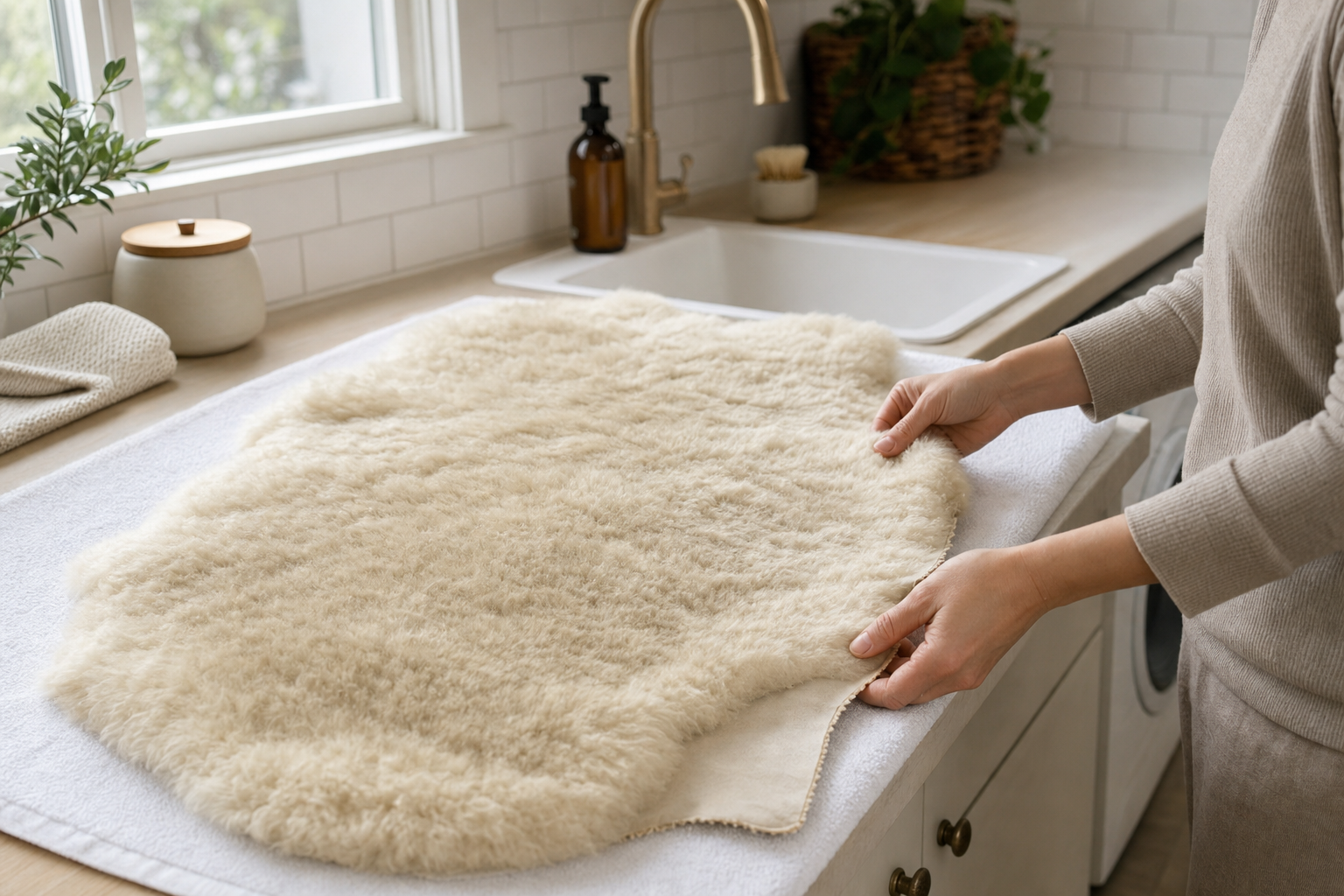 Pro Tip: Keep a simple care log for shared equipment. Note the wash date, the product condition, and any skin issue found during inspection.
Medical Sheepskin from Kiwi Sheepskins
Kiwi Sheepskins is a family-owned New Zealand retailer with a long focus on genuine sheepskin comfort. Our Medical Pelts feature a natural-shaped pelt without a fabric backing.
The backing-free design leaves the wool pile open on both sides of the natural pelt structure. That gives the product a flexible feel and lets air move around the wool. It also means the pelt does not have the same fixed shape as a fabric-backed overlay.
That difference matters when you are comparing products. Many medical sheepskins in the wider market are linked with formal tanning standards, fixed pile heights, or high-temperature wash claims. Those features can be useful in a hospital setting. They do not automatically make a product more comfortable for every person at home.
Our research into 33 medical sheepskin products found a clear split in design. Most products with a known source came from Australia, while the Medical Pelts in our range were the only New Zealand-origin option in that dataset. The comparison also found that reported thickness values clustered close to 30 mm. Medical Pelts take a less standardized route by relying on natural shape and springy wool rather than a stated thickness alone.
We are careful with the word “medical.” A pelt can support comfort and pressure care, but it cannot promise that a wound will heal or that a pressure injury will not occur. Good positioning, regular movement, skin checks, and clinical advice still matter.
Medical Pelts may suit someone who wants broad coverage on a bed, chair, or resting surface. They may also suit a household that values natural materials and a pelt that can move between settings. Before ordering, check the size, intended use, care instructions, and the user’s ability to reposition it.
For customers who need a smaller item, we also carry sheepskin products for other comfort needs, such as footwear and cushions. Those products should not be treated as medical overlays unless the product description says they are intended for that use.
Our approach is simple: explain what the pelt is, state how it should be cared for, and leave room for you to decide. If you are unsure which format fits a bed, recliner, or wheelchair, ask your care team first, then compare the live product details on our site.
FAQ: Medical Sheepskin Questions Answered
What is medical sheepskin used for?
Medical sheepskin is used to support comfort and pressure care on beds, chairs, wheelchairs, and around the feet. Its springy wool pile can spread contact over a wider area and help air move near the skin. It should be used with regular position changes and skin checks, not as a replacement for clinical care.
Can medical sheepskin prevent bed sores?
There is real clinical evidence behind this, though it is more specific than a blanket claim that "sheepskin prevents bedsores." A Cochrane review of support surfaces for pressure ulcer prevention pooled three trials of Australian standard medical sheepskin and found it reduced the rate of new pressure ulcers developing, compared with standard care. A 2004 randomised trial at Royal Melbourne Hospital, published in the Medical Journal of Australia, found sacral pressure ulcer incidence dropped from 16.6% to 9.6% in patients at low-to-moderate risk who used a sheepskin overlay for an average of 7 to 8 days, though that trial was not blinded. Taken together, this points to a genuine preventive effect for at-risk but not yet injured skin. It is not proof that any sheepskin product will prevent a bedsore for every individual, and it is not evidence that sheepskin treats a bedsore once one exists.
Does sheepskin help treat an existing bedsore, or only prevent one?
The research above is about prevention, not treatment. It measured whether sheepskin reduced how many new pressure injuries developed in people who did not yet have one — it says nothing about healing a bedsore that has already formed. A pelt should never replace proper wound care once skin has broken down. If a pressure injury is already present, speak with a nurse, doctor, or wound care specialist about the right dressing and support surface first; sheepskin may still have a place for general comfort around a healing area, but only on your clinician's advice.
Who is most likely to benefit from a medical sheepskin bed pad?
The strongest evidence covers people at low-to-moderate pressure injury risk — for example, someone largely confined to bed or a wheelchair who does not yet have a wound. That includes many older adults, people recovering from surgery, and anyone with reduced mobility from illness or injury. For someone at high risk, with reduced sensation, or with an existing pressure injury, a sheepskin overlay is worth discussing with a nurse or occupational therapist alongside — not instead of — a proper pressure-relieving mattress or cushion.
Is a "medical sheepskin bed pad" the same as the natural-shaped medical pelts described above?
Not quite — the terms get used loosely across the market, so it is worth checking the specific product. Our Sheepskin Bed Pad & Wool Underlay is a fitted, rectangular design with a quilted backing and elastic corner straps, built to stay in place under a fitted sheet. The natural-shaped Medical Pelts described earlier in this guide have no backing or straps and keep the pelt's original contours. Both use the same grade of wool; the difference is fit and how securely each stays positioned, not the pressure-care properties of the wool itself.
What is the difference between medical sheepskin and a baby sheepskin?
Medical sheepskin is selected and prepared for pressure care, while baby sheepskin is crafted for infant comfort. Medical pelts often have a shorter, denser pile and care instructions suited to repeated washing. They are not interchangeable by default. Check the stated use, pile, tanning method, and wash temperature before choosing.
How do you wash a medical sheepskin?
Wash a medical sheepskin according to its product care label. Some can handle higher temperatures, while others need a delicate lower-temperature wash. Use a mild wool-safe cleaner, avoid bleach, and never wring the pelt. Reshape it while damp, then air dry it away from heaters and strong direct sunlight.
Can you sleep on medical sheepskin every night?
You may be able to use medical sheepskin overnight if the product suits the bed and the user’s care needs. Keep the pelt flat and inspect the skin at suitable intervals. People with reduced sensation, wounds, poor circulation, or an existing pressure injury should ask a health professional before regular use.
Conclusion
Choose medical sheepskin by use area, fit, wash needs, and the person’s care plan. Kiwi Sheepskins’ natural-shaped Medical Pelts are a sensible starting point when you want an open, backing-free wool surface. Before ordering, measure the space and review the live care instructions. If there is a wound or ongoing skin concern, speak with a clinician first.


